Can You Really Understand AI-Generated Smart Contracts?
A piece of code that looks normal could put your crypto assets at serious risk.
In 2026, a cluster of YouTube “AI Trading Bot” tutorials led users through a highly unusual scam. No seed phrase had to be surrendered. No classic wallet drainer was required. Victims deployed the contracts and signed the transactions themselves.
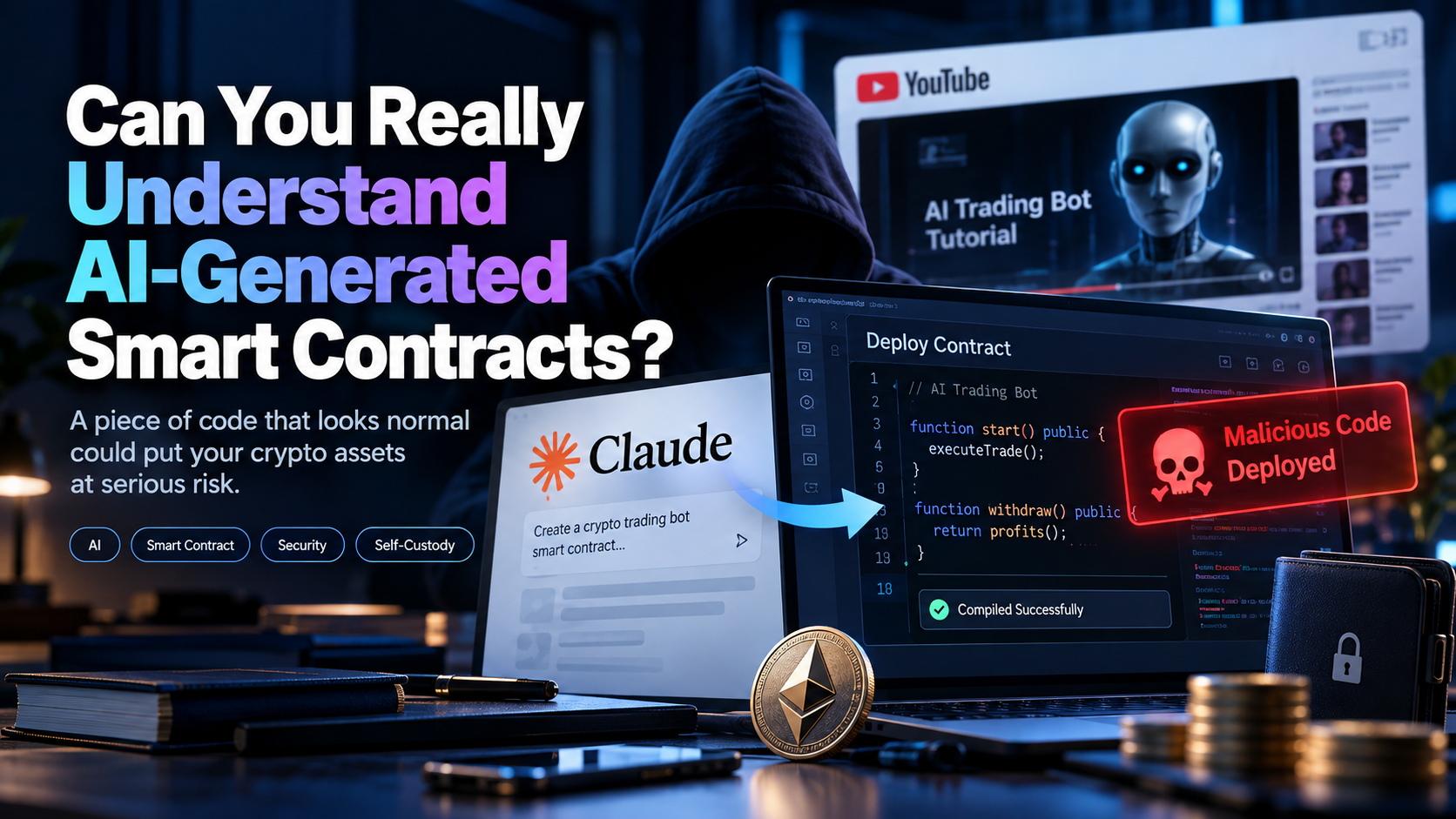
This Wasn't a Typical Wallet-Draining Scam
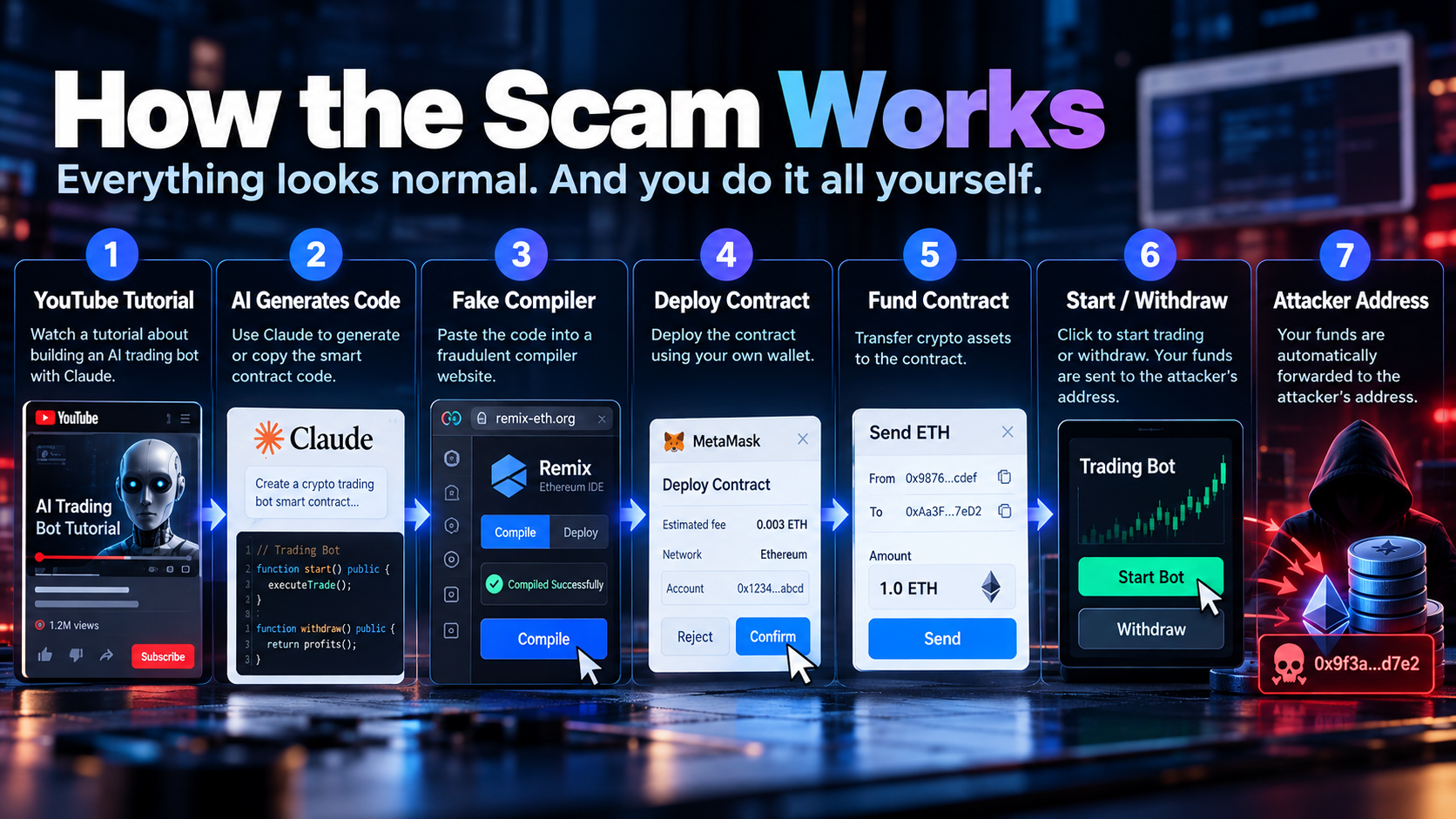
TRM Labs identified a network of highly similar YouTube tutorials promoting AI-powered crypto trading bots. The videos instructed viewers to deploy and fund smart contracts through a fraudulent development environment.
Investigation published by TRM Labs on September 14, 2026.
Different Channels. Nearly the Same Tutorial.
The operation relied on videos that looked like ordinary Web3 tutorials: AI narration, code walkthroughs, development tools, wallet confirmations, and apparently positive engagement. The repeated structure helped create the impression that the method was widely used.

Watch the Scam Being Broken Down
This investigation walks through the AI Trading Bot pitch, the suspicious development environment, and the absence of genuine AI trading functionality.
Investigation video: “The AI Trading Bot Scam Taking Over YouTube.” Embedded locally in this feature.
Everything Looks Normal — Because You Do It Yourself
The victim watches the tutorial, copies the code, opens the recommended compiler, deploys a contract, funds it, and later calls Start or Withdraw. Each step can look like a legitimate user action.
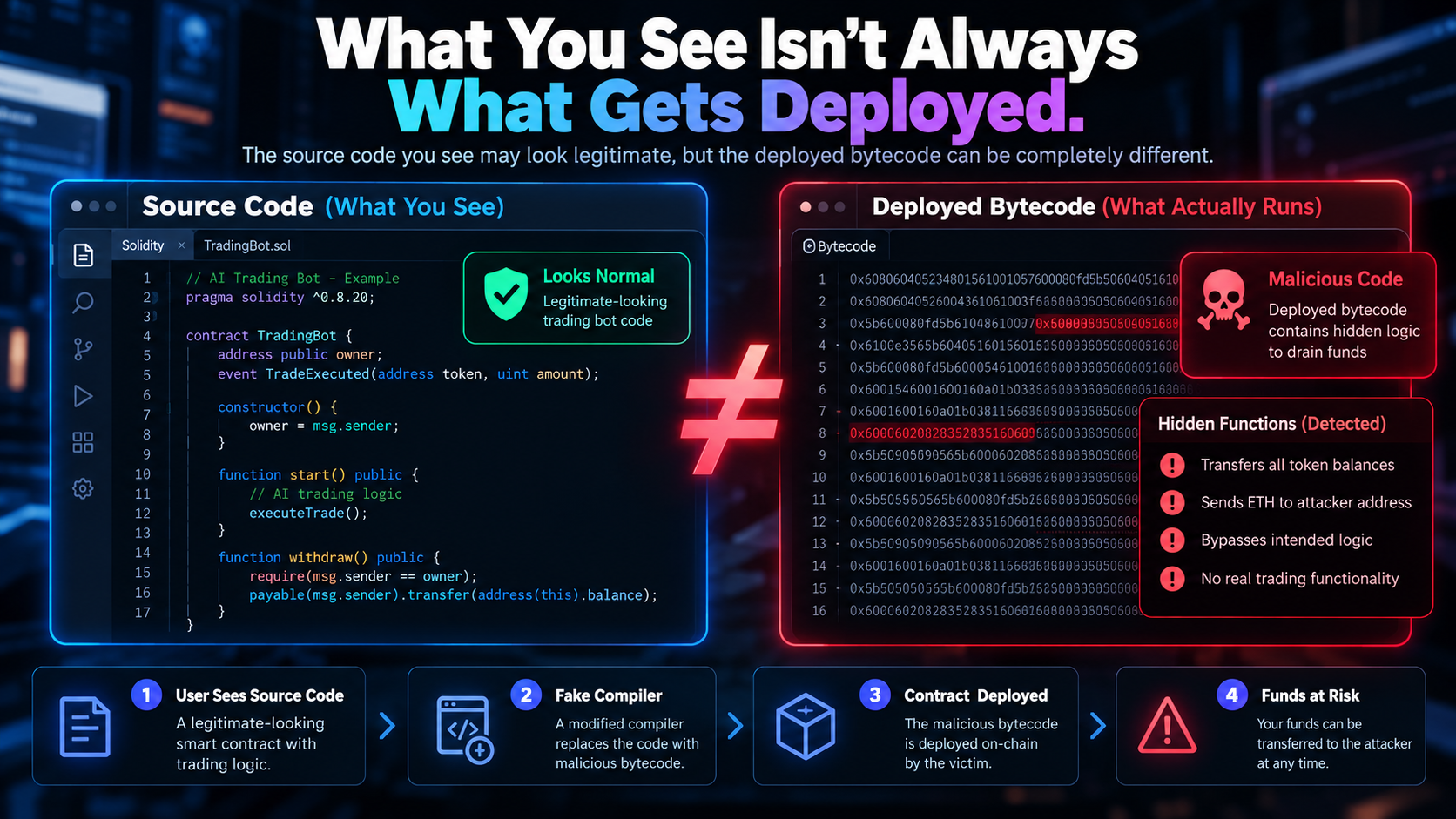
What You See Isn't Always What Gets Deployed
One of the most important findings is the gap between visible source code and the bytecode actually placed on-chain. In a malicious compilation environment, a user can inspect legitimate-looking source while the backend compiles something else.
The Wallet May Be Doing Exactly What You Asked
This does not mean wallet security tools are ineffective. It means the attack surface can sit outside the private-key layer.
What Happened After the Contracts Were Funded?
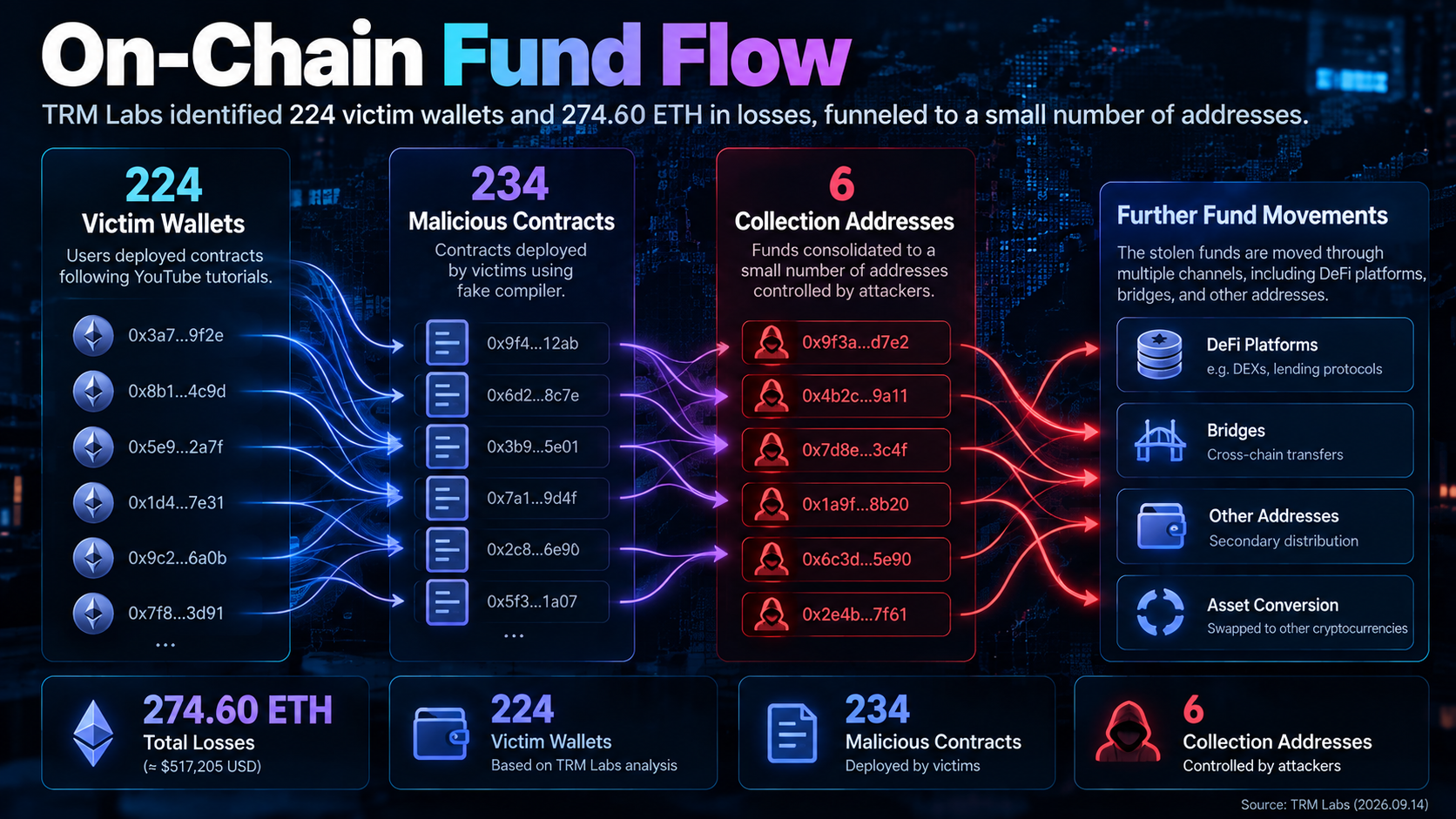
TRM Labs identified 234 victim-deployed and funded contracts tied to 224 victim wallets. The median victim loss was 1 ETH. Funds were consolidated through six shared collection addresses before moving further through decentralized infrastructure.
The Most Important Part of This Story Isn't AI
AI was the hook, not the core exploit.
TRM Labs reported no evidence that Claude or Anthropic technology was actually powering the contracts or the malicious compiler. The brand helped make the tutorial sound current and credible.
The attack surface moved into the development workflow.
A user could carefully read the displayed source and still fail to verify the compiler, the resulting bytecode, or the deployed contract.
Self-custody does not end at key ownership.
Controlling your private key protects custody. It does not automatically prove that every contract, interface, transaction or execution path is safe.
Private-Key Security Is Essential — But It Isn't the Whole Story
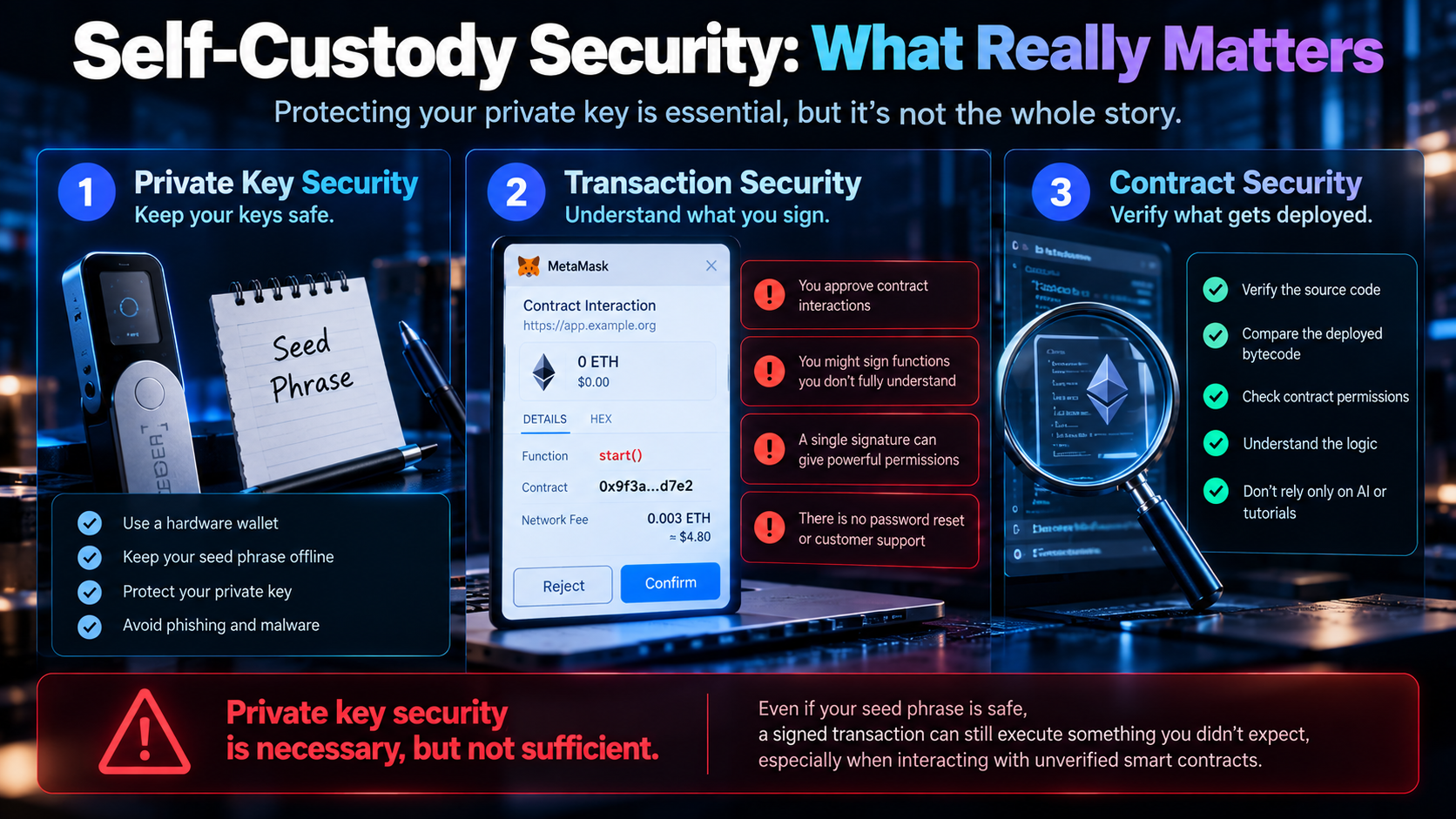
A Practical Verification Checklist
Verify the transaction.
Self-Custody Gives You Control. It Also Expands What You Need to Verify.
The most counterintuitive part of this case is that victims could remain in control of their wallets throughout the process — while still authorizing actions whose true outcome they did not understand.